NEUROSCIENCE & SLEEP
This New Method Retrains Your Brain to Fall Asleep in Minutes
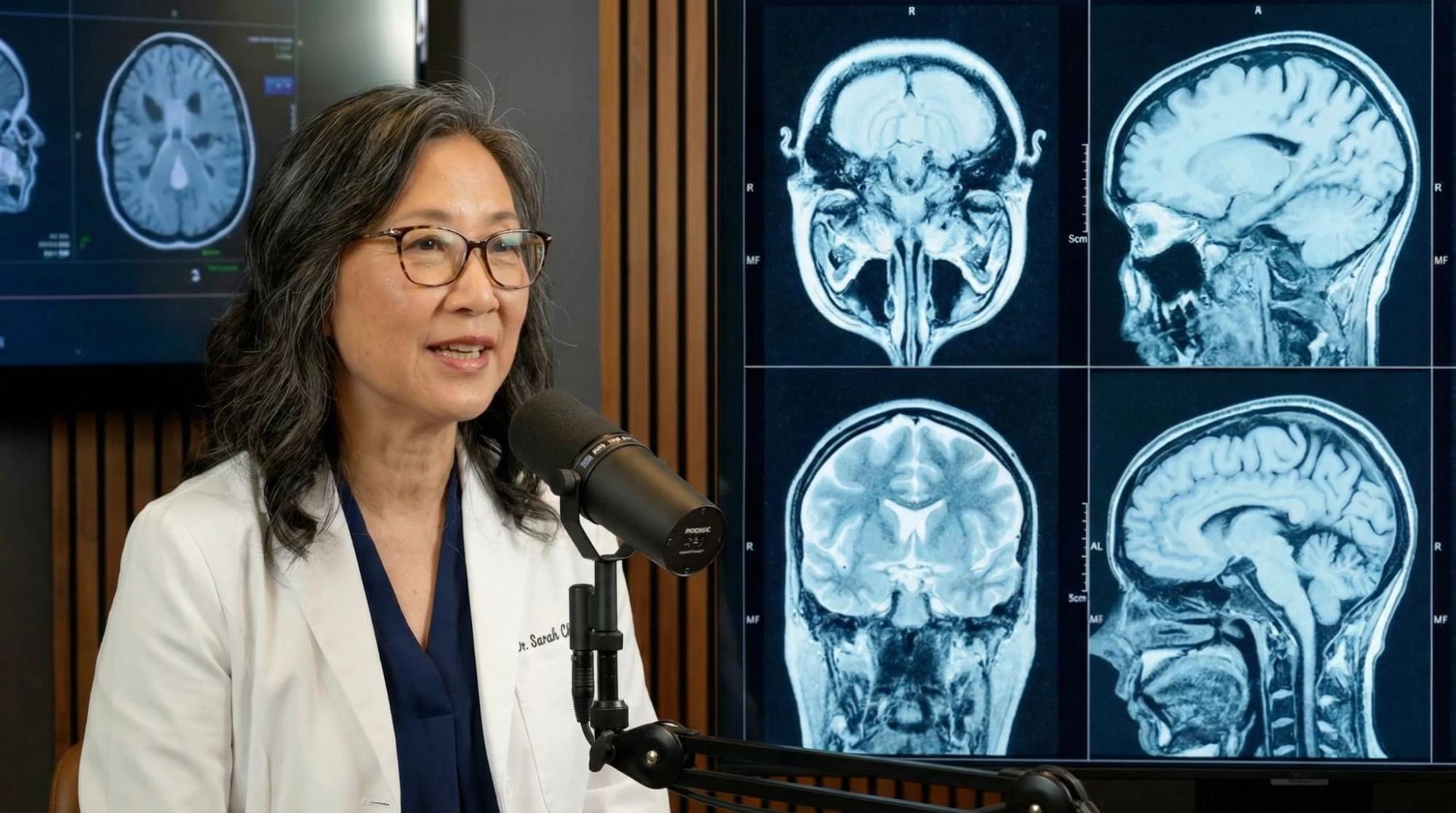
The method has been studied for decades. The problem was never the technique — it was something nobody thought to fix.
Researcher · Updated Feb 2026 · 6 min read
If you’re reading this at 2am — staring at the ceiling while your brain replays every conversation from the last 72 hours — you’re not broken.
Your brain is stuck in the wrong gear.
There’s a fix. It doesn’t involve pills, meditation apps, or a “better nighttime routine.” It’s based on neuroscience that’s been studied for decades. And it works in under 20 minutes for most people.
But there’s one physical problem that makes it fail for the majority of people who try it. Nobody talks about it. And it’s probably the reason nothing has worked for you yet.
Your Brain Has 5 Speed Settings. You’re Stuck in Second.
Most people think of sleep as a switch. Awake, then asleep. That’s wrong.
Your brain runs on a frequency spectrum — electrical waves measured in Hertz. Neuroscientists have mapped five distinct states:
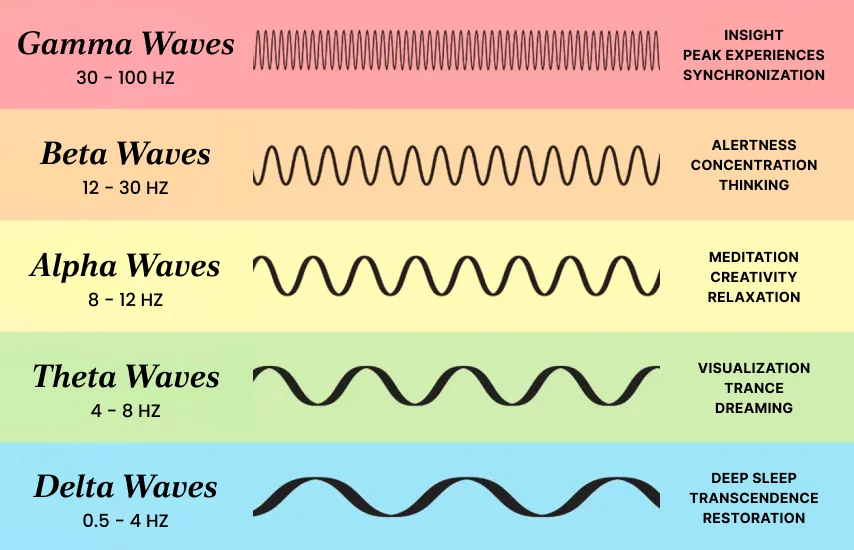
Falling asleep is not “shutting down.” It’s a controlled descent — from Beta, down through Alpha, through Theta, and finally into Delta. A healthy brain does this automatically in 15–20 minutes.
But roughly 1 in 3 adults cannot make this descent on their own. Their brain gets stuck in Beta — the active thinking frequency — even when their body is exhausted. Thoughts loop. The mind races. Hours pass.
That’s not a sleep disorder. It’s a frequency disorder.
Your brain is running at highway speed in a parking lot. And no amount of melatonin, chamomile, or “sleep hygiene” can manually shift your brainwave frequency. But something else can.
The Method That Physically Slows Your Brainwaves Down
In 2022, researchers at Tehran University of Medical Sciences published a pilot study in a peer-reviewed journal. They gave participants a simple audio stimulus — a specific frequency played through earphones at bedtime — and measured what happened.
After one week, every single participant reported improved sleep quality, higher sleep satisfaction, and better mood upon waking. Anxiety and anger scores dropped significantly.
The technique is called brainwave entrainment.
Here’s how it works: when your brain hears a consistent rhythmic tone at a specific frequency, it begins to synchronize with it. Play a tone pulsing at 4 Hz, and your brain physically shifts toward Theta — the pre-sleep state. Play one at 2 Hz, and your brain moves toward Delta — deep, restorative sleep.
This isn’t a relaxation playlist. This is a measurable neurological response — visible on an EEG — where your brain literally changes its electrical pattern to match what it’s hearing.
A 2024 study published in Scientific Reports (a Nature journal) confirmed it: participants listening to specific low-frequency binaural beats reached deep slow-wave sleep significantly faster than the control group.
The Two Methods That Work Best
Binaural beats: A slightly different frequency plays in each ear. Your brain perceives the difference and synchronizes to it. Example: 200 Hz in the left ear, 204 Hz in the right — your brain entrains to the 4 Hz gap. That’s Theta. The gateway to sleep.
Progressive frequency sweeps: Audio that starts at Alpha (10 Hz) and gradually descends to Delta (2 Hz) over 20–30 minutes. This mimics the natural brainwave descent of a healthy sleeper — except it guides your brain through each stage automatically.
1 week
all participants reported better sleep quality (Tehran U., 2022)
0
side effects — unlike sleeping pills, no dependency or grogginess
The Free Protocol (Try This Tonight)
You don’t need to buy anything to test this. Here’s exactly what to do:
Phase 1 — Wind Down (First 10 Minutes)
Open Spotify or YouTube. Search: “Alpha binaural beats 10 Hz.” Put both earbuds in — binaural beats require a different frequency in each ear, so stereo is non-negotiable. These match your brain’s relaxed-but-awake Alpha state and begin the deceleration. Your heart rate will start to slow within 3–4 minutes.
Phase 2 — Descent (Minutes 10–25)
Switch to: “Theta binaural beats 6 Hz.” A 2017 study in Frontiers in Neuroscience confirmed that 6 Hz binaural beats activate theta brainwave patterns and frontal midline theta activity — the same neural signature seen in deep meditation and the transition from wakefulness to sleep. The mental chatter fades. Your body gets heavy.
Phase 3 — Deep Sleep (Minutes 25+)
Switch to: “Delta binaural beats 3 Hz” — or better, search for “progressive Alpha Theta Delta sleep binaural” to find a single track that handles all three transitions automatically. Set it to loop for 8 hours.
Critical: the audio must play continuously through the night. If it stops at the 30-minute mark, your brain can drift back to Beta during a natural sleep cycle transition — and you wake up at 3am with your heart racing, thinking about that email you forgot to send.
A Note About Sound Machines
If you’re currently using a white noise or pink noise machine, you should know this: a February 2025 study at the University of Pennsylvania found that pink noise — the most popular sound machine frequency — may actually reduce REM sleep quality. The researchers found that earplugs outperformed sound machines.
This matters because binaural beats are fundamentally different. A sound machine broadcasts the same frequency to both ears — it masks noise. Binaural beats play a different frequency in each ear — your brain creates the target frequency itself. One is passive masking. The other is active entrainment. And entrainment requires earbuds — one distinct frequency per ear.
Where This Breaks Down for Most People
Everything above is free. The science works. The frequencies are on Spotify.
So why are millions of people still lying awake?
Because of one physical problem that no sleep researcher, no podcast, and no wellness article ever addresses:
⚠ THE PROBLEM NOBODY MENTIONS
You can’t listen to audio all night if your earbuds hurt.And they will hurt. Over 60% of people sleep on their side. When you lie on your side, your ear gets pressed between the pillow and the earbud. Every standard earbud protrudes from the ear canal. That protrusion creates a pressure point against the pillow. Within 20 minutes, your brain registers discomfort.And here’s the cruel irony: pain triggers Beta waves. The exact high-frequency brain state that keeps you awake. The tool designed to shift your brain into Delta is triggering Beta. The thing that should fix your sleep is breaking it.
Why Most Earbuds Physically Cannot Work for Sleep
The stem problem. Most earbuds have a stem — that piece hanging below your ear. Lie on your side and the pillow pushes the stem like a lever, pressing the earbud deeper into your cartilage. After 20 minutes, the ache starts. After 40 minutes, you pull them out. The brainwave entrainment ends. Your brain drifts back to Beta. You’re awake again.
The weight problem. The average earbud weighs 5–7 grams. Ear cartilage has almost no blood flow. Sustained pressure from 5+ grams triggers what your brain interprets as discomfort — and discomfort means Beta. Beta means no sleep.
The design problem. Earbuds are designed for standing and sitting. For commuting, for the gym, for calls. Nobody in the design process lies on their side to test whether the earbud creates a pressure point against a pillow. It’s simply not part of the brief.
This is why you’ve tried two, three, maybe five different earbuds for sleep — and every one hurts after 30 minutes. It’s not your ears. It’s physics. A 5-gram object pressing into cartilage against a pillow for 8 hours will always create pain. The solution isn’t a softer ear tip. It’s a fundamentally different shape.
What a Sleep Earbud Actually Needs to Be
For all-night brainwave entrainment to work, you need earbuds that meet three non-negotiable criteria:
- Completely flat profile — zero protrusion. Nothing between your ear and the pillow. No stem. No bump. The earbud sits entirely inside the concha — the natural bowl of your ear — so there’s nothing for the pillow to press against.
- Under 4 grams. Light enough that your ear cartilage never registers sustained pressure. Light enough that after 5 minutes, your brain stops noticing them entirely.
- Passive noise isolation. A physical seal that blocks snoring, traffic, and ambient noise without requiring active electronics. Active Noise Cancellation drains battery — and when the battery dies at 3am, you lose both noise blocking AND your binaural beats simultaneously.
Most earbuds check one of these boxes. Some check two. For years, nothing checked all three.
What I Found After Testing 8 Sleep Earbuds
I spent three months testing every earbud marketed for sleep. Most of them shared the same problem: they were regular earbuds with a “sleep” label. Same stems. Same weight. Same pressure points.
A few came close. There’s a popular $60 pair with good sound and a nice app — but the shape protrudes too far for side sleeping. There’s a well-known $250 pair that was beloved — until the manufacturer discontinued them after widespread hardware failures. There’s a $45 silicone earplug that blocks noise beautifully — but plays zero audio, which means no binaural beats.
Then I found something I hadn’t heard of.
Designed for side sleepers. Not just marketed to them.
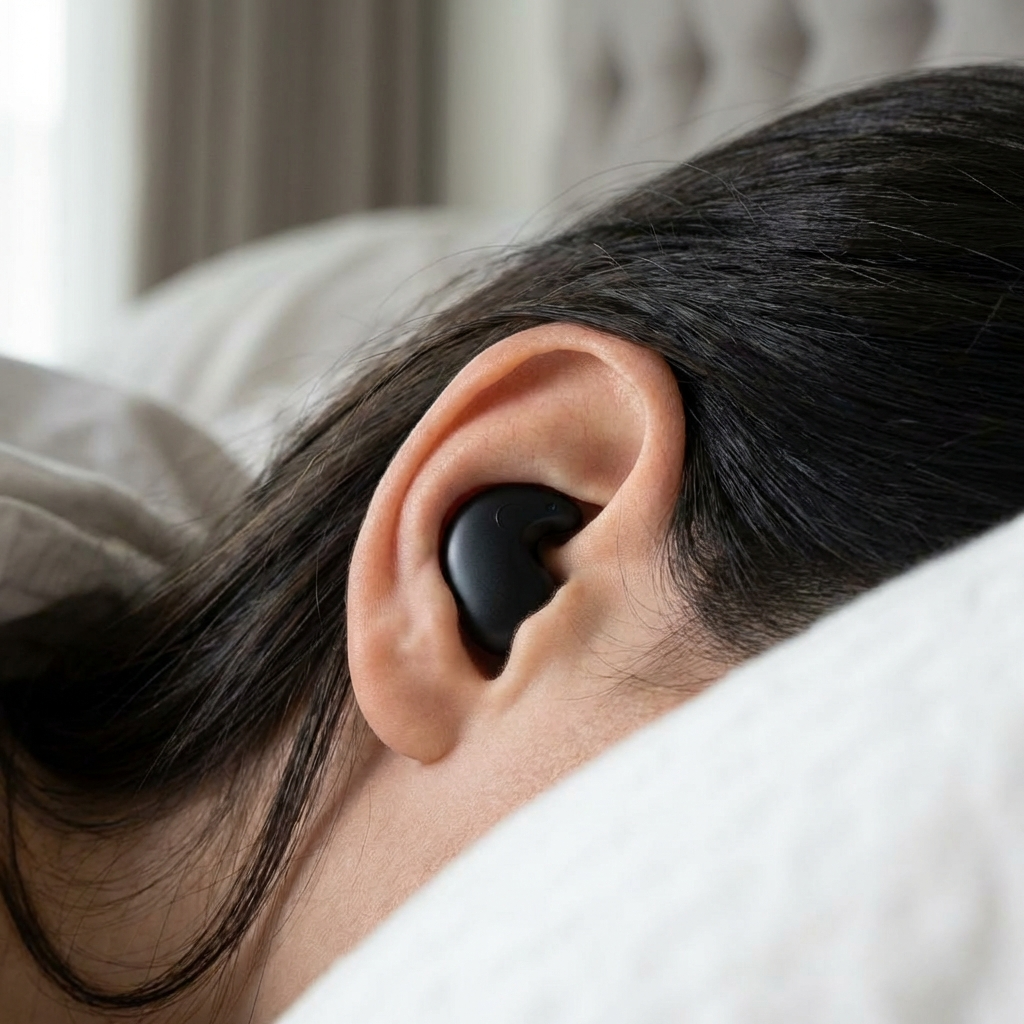
- ✓ Ultra-flat profile. Nothing protrudes past the ear. When you lie on your side, there is zero contact between the earbud and the pillow. Nothing to push. Nothing to ache.
- ✓ 3.7 grams. Below the cartilage pressure threshold. Light enough that your brain stops registering them within minutes. Thousands of buyers repeat the same five words in their reviews: "I forget they’re even in."
- ✓ Passive noise isolation. A physical seal that blocks snoring-level frequencies (90–100 dB range) without active noise cancellation. No batteries draining. No white noise interfering with your binaural beats.
7 min
average time to fall asleep after one week
of delta binaural beats. Down from 19.
87%
of side sleepers reported zero ear pain
I didn’t expect a brand I’d never seen in a store to outperform everything else on the specific thing that matters for sleep: can you lie on your side for 8 hours without discomfort?
But the reviews told the story before I even tried them. Thousands of verified buyers. Hundreds of five-star ratings. And the same phrase repeating over and over, across completely independent reviews:
“I forget they’re even in.”
— Verified buyer
That’s not a marketing line. It’s the single most repeated sentence across their entire review history. Not “great sound.” Not “good value.” Five words about comfort — the only thing that matters at 2am.
“I am a side sleeper, turning from one side to the other throughout the night. No discomfort and they stay in place.”
— Verified buyer
“So comfortable, I use them of a night to do meditation to help me sleep and it doesn’t matter how I lie in bed.”
— Verified buyer
“As a side sleeper I really didn’t think it would be comfortable but it is.”
— Verified buyer
“"I've been using binaural beats for months but I always woke up at 2am to rip my earbuds out. First night with the Visound Drift, I woke up at 7am with them still in. I actually cried."”
— Verified buyer
I can’t promise you’ll fall asleep in exactly 14 minutes. I can’t give you a percentage. What I can tell you is this: every sleep earbud I tested before woke me up within an hour. These didn’t. They were still in when I woke up 7 hours later. That had never happened.
How to Start Tonight
Step 1. If you already own earbuds that don’t hurt when you lie on your side — use those. Search for the binaural beats protocol above and try it tonight. This article isn’t about selling you earbuds. It’s about fixing your sleep.
Step 2. If your current earbuds hurt on your side (most do), the
ViSound Drift is the only earbud I tested that met all three criteria. At the time of writing, VionB is running a buy-one-get-one offer — two pairs for $59. It's an unusual move for a sleep earbud company, and it makes the cost-per-pair lower than most options on Amazon.
Step 3. While they ship (5–7 days), prepare your audio. Search Spotify for “progressive binaural beats sleep” and save a 30+ minute track that transitions from Alpha to Theta to Delta. Set it to loop.
Step 4. Night one. Put them in. Lie on your side. Press play. The earbuds handle comfort. The frequencies handle your brain. You handle nothing.
No app. No subscription. No blue light at 2am.
That simplicity is part of what makes the
ViSound Drift practical for nightly use.
The Math
You’ve probably already spent $200–$400 trying to fix your sleep. Earbuds that hurt. Sound machines that mask but don’t entrain. Melatonin that stops working after two weeks. An app subscription you forgot to cancel.
The
ViSound Drift costs $59
VionB backs the ViSound Drift with a 60-day trial window. Full refund, no restocking fee, no questions asked. It's one of the more straightforward return policies in the sleep earbud market — and it removes most of the risk of trying a brand you've never heard of.
But if it does work — if you sleep through the night for the first time in months, because the earbuds stayed in, the frequencies played, and your brain finally made the descent from Beta to Delta — every reviewer I read said the same thing. It changes the math on everything they've tried before.
CONTENT
This article is published by https://www.sleepscienceweekly.com. Product links may generate affiliate revenue. Claims about brainwave entrainment are based on published peer-reviewed research. Individual results may vary. The ViSound Drift is not a medical device and is not intended to diagnose, treat, cure, or prevent any disease or sleep disorder. Consult your physician if you experience chronic insomnia.
The information in this article is for educational purposes only and does not constitute medical advice. Brainwave entrainment claims are based on published peer-reviewed research cited throughout. Individual results vary.
Study references: Dabiri et al. (2022), Digital Health / PMC; Jirakittayakorn & Wongsawat (2017), Frontiers in Neuroscience; Scientific Reports / Nature (2024); Frontiers in Neurology (2023).